
Etp Sludge Disposal
- Home
- Etp Sludge Disposal
Etp Sludge Disposal
The residue that accumulates in sewage treatment plants is called sludge (or biosolids). Sewage sludge is the solid, semisolid, or slurry residual material that is produced as a by-product of wastewater treatment processes. This residue is commonly classified as primary and secondary sludge. Primary sludge is generated from chemical precipitation, sedimentation, and other primary processes, whereas secondary sludge is the activated waste biomass resulting from biological treatments. Some sewage plants also receive septage or septic tank solids from household on-site wastewater treatment systems. Quite often the sludges are combined for further treatment and disposal.
Treatment and disposal of sewage sludge are major factors in the design and operation of all wastewater treatment plants. Two basic goals of treating sludge before final disposal are to reduce its volume and to stabilize the organic materials. Stabilized sludge does not have an offensive odor and can be handled without causing a nuisance or health hazard. Smaller sludge volume reduces the costs of pumping and storage.
Dewatering
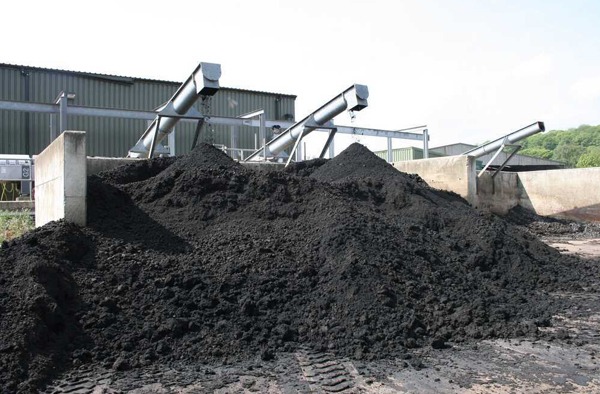
Digested sewage sludge is usually dewatered before disposal. Dewatered sludge still contains a significant amount of water—often as much as 70 percent—but, even with that moisture content, sludge no longer behaves as a liquid and can be handled as a solid material. Sludge-drying beds provide the simplest method of dewatering. A digested sludge slurry is spread on an open bed of sand and allowed to remain until dry. Drying takes place by a combination of evaporation and gravity drainage through the sand. A piping network built under the sand collects the water, which is pumped back to the head of the plant. After about six weeks of drying, the sludge cake, as it is called, may have a solids content of about 40 percent. It can then be removed from the sand with a pitchfork or a front-end loader. To reduce drying time in wet or cold weather, a glass enclosure may be built over the sand beds. Since a good deal of land area is needed for drying beds, this method of dewatering is commonly used in rural or suburban towns rather than in densely populated cities.
Alternatives to sludge-drying beds include the rotary drum vacuum filter, the centrifuge, and the belt filter press. These mechanical systems require less space than sludge-drying beds, and they offer a greater degree of operational control. However, they usually have to be preceded by a step called sludge conditioning, in which chemicals are added to the liquid sludge to coagulate solids and improve drainability.
Disposal
The final destination of treated sewage sludge usually is the land. Dewatered sludge can be buried underground in a sanitary landfill. It also may be spread on agricultural land in order to make use of its value as a soil conditioner and fertilizer. Since sludge may contain toxic industrial chemicals, it is not spread on land where crops are grown for human consumption.
Where a suitable site for land disposal is not available, as in urban areas, sludge may be incinerated. Incineration completely evaporates the moisture and converts the organic solids into inert ash. The ash must be disposed of, but the reduced volume makes disposal more economical. Air pollution control is a very important consideration when sewage sludge is incinerated. Appropriate air-cleaning devices such as scrubbers and filters must be used.