Hazard Waste Disposal
- Home
- Hazard Waste Disposal
Hazard Waste Disposal
Hazardous waste generated at a particular site often requires transport to an approved treatment, storage, or disposal facility (TSDF). Because of potential threats to public safety and the environment, transport is given special attention by governmental agencies. In addition to the occasional accidental spill, hazardous waste has, in the past, been intentionally spilled or abandoned at random locations in a practice known as “midnight dumping.” This practice has been greatly curtailed by the enactment of laws that require proper labeling, transport, and tracking of all hazardous wastes.
Transport vehicles
Hazardous waste is generally transported by truck over public highways. Only a very small amount is transported by rail, and almost none is moved by air or inland waterway. Highway shipment is the most common because road vehicles can gain access to most industrial sites and approved TSDFs. Railroad trains require expensive siding facilities and are suitable only for very large waste shipments.
Hazardous wastes can be shipped in tank trucks made of steel or aluminum alloy, with capacities up to about 34,000 liters (9,000 gallons). They also can be containerized and shipped in 200-litre (55-gallon) drums. Specifications and standards for cargo tank trucks and shipping containers are included in governmental regulations.
Surface storage and land disposal
Hazardous wastes that are not destroyed by incineration or other chemical processes need to be disposed of properly. For most such wastes, land disposal is the ultimate destination, although it is not an attractive practice, because of the inherent environmental risks involved. Two basic methods of land disposal include landfilling and underground injection. Before land disposal, surface storage or containment systems are often employed as a temporary method.
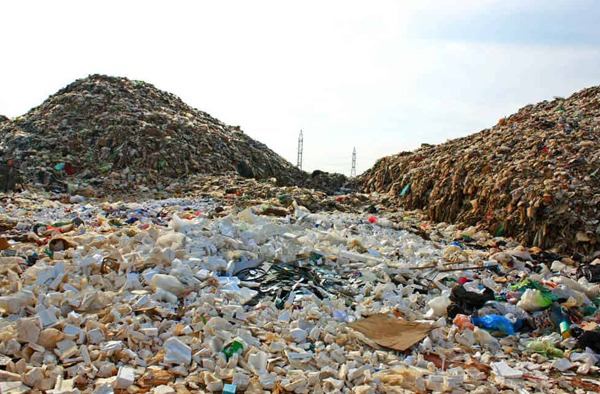
Temporary on-site waste storage facilities include open waste piles and ponds or lagoons. New waste piles must be carefully constructed over an impervious base and must comply with regulatory requirements similar to those for landfills. The piles must be protected from wind dispersion or erosion. If leachate is generated, monitoring and control systems must be provided. Only noncontainerized solid, nonflowing waste material can be stored in a new waste pile, and the material must be landfilled when the size of the pile becomes unmanageable.
A common type of temporary storage impoundment for hazardous liquid waste is an open pit or holding pond, called a lagoon. New lagoons must be lined with impervious clay soils and flexible membrane liners to protect groundwater. Leachate collection systems must be installed between the liners, and groundwater monitoring wells are required. Except for some sedimentation, evaporation of volatile organics, and possibly some surface aeration, open lagoons provide no treatment of the waste. Accumulated sludge must be removed periodically and subjected to further handling as hazardous waste.
Many older, unlined waste piles and lagoons are located above aquifers used for public water supply, thus posing significant risks to public health and environmental quality. A large number of these old sites have been identified and scheduled for cleanup, or remediation, around the world.